
 Image 1 of 5
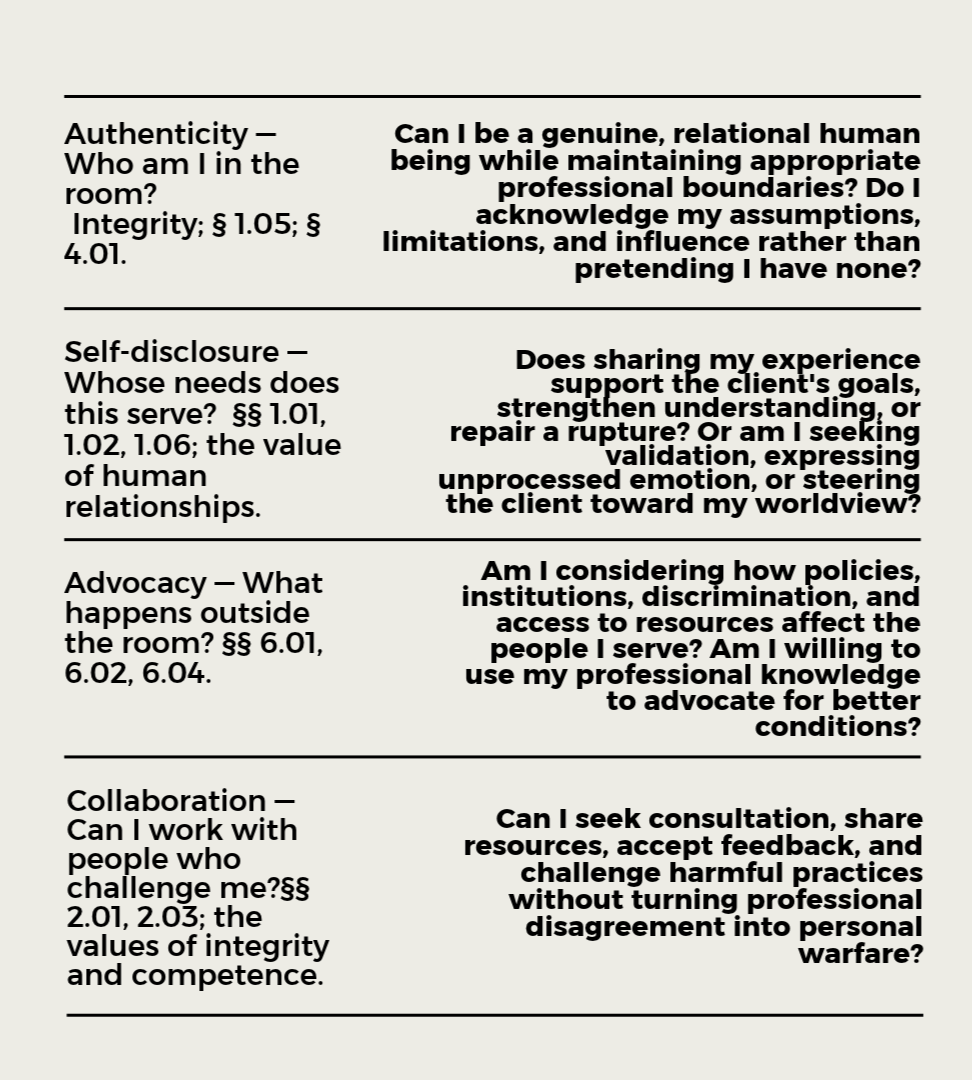 Image 2 of 5
 Image 3 of 5
 Image 4 of 5
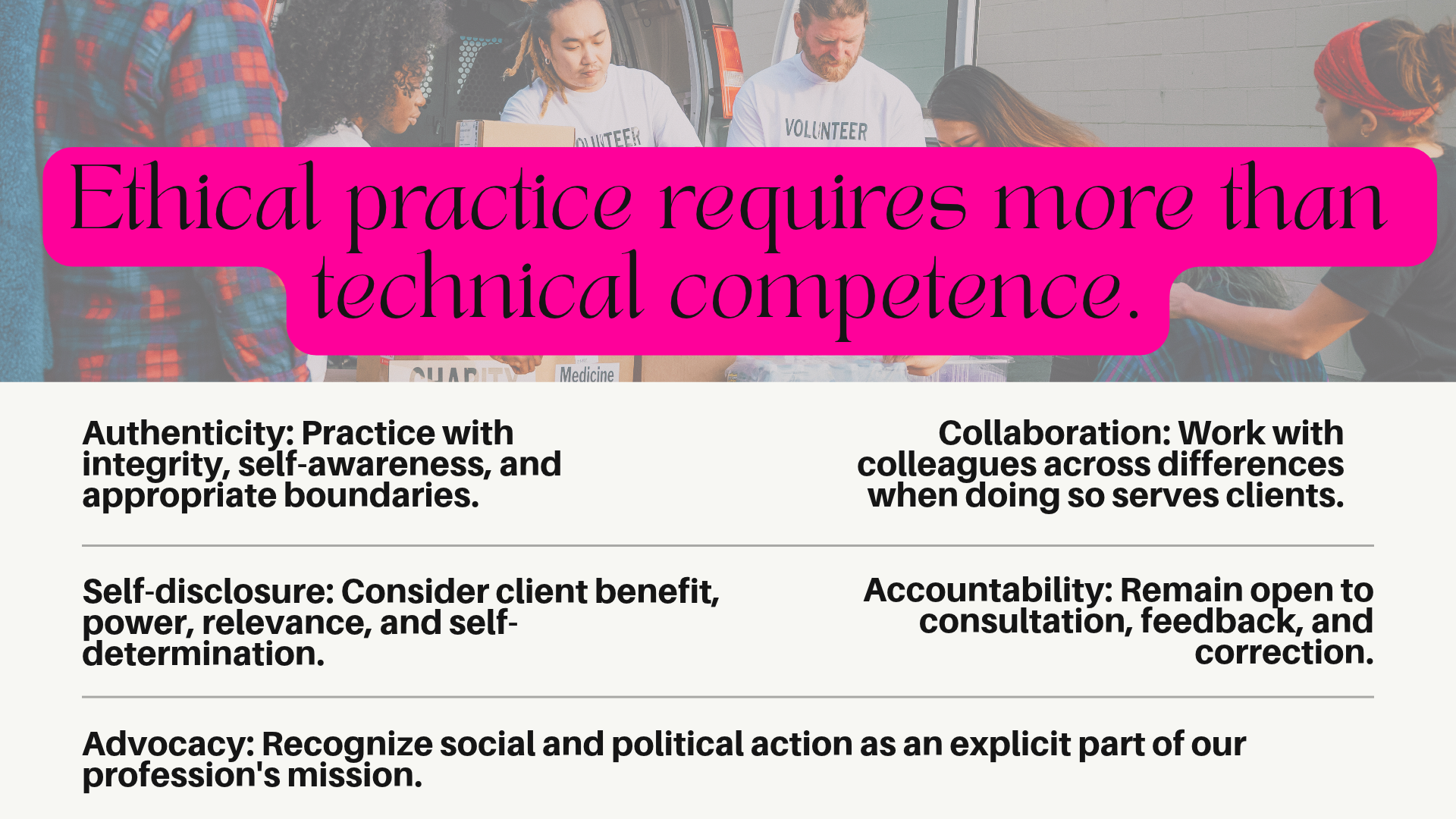 Image 5 of 5
Learn about half price therapy for new clients Nov 2 - Dec 31, 2026 to help support the mental + sexual wellness needs of our community during the holiday season. Reach out via our contact form for more information.
This expanded continuing education training is designed for social workers who want to take a deeper dive following the NASW conference presentation, those who were unable to attend, or professionals looking to better understand the ethical considerations behind professionalism, professional identity, and self-disclosure in modern social work practice.
Professionalism is more than knowing the Code of Ethics, maintaining boundaries, or accumulating credentials. It also requires us to examine how we show up in professional relationships, navigate conflict with colleagues, make decisions about self-disclosure, and recognize the role our own identities and experiences play in our work.
Through practical applications, ethical reflection, and real-world considerations, this training explores the tension between maintaining professional standards and preserving the human connection at the heart of social work.
Topics include:
Navigating professional conflict and resolving disagreements with colleagues.
Ethical self-disclosure and knowing when transparency serves the client versus the professional.
Therapeutic use of self, authenticity, and relational presence.
Professional development, credential accumulation, and knowing when competence-building becomes credential collecting.
Balancing professional boundaries, accountability, and meaningful connection.
This training is for providers who want to move beyond simply knowing what professionalism looks like and begin examining what it actually requires of us.
Elizabeth Westbrook, LCSW, NPT-C, is a clinical social worker, educator, speaker, and founder of The Reclaimed Collective, a West Houston therapy practice specializing in Christian trauma and sexuality care.
As a professor at the University of Houston Graduate College of Social Work, Elizabeth brings together clinical experience, social work education, ethics, and real-world professional practice. Her work explores the intersections of trauma, sexuality, faith, professional identity, and the relational responsibilities of helping professionals.
Known for her candid, conversational approach, Elizabeth challenges social workers to look beyond professional titles and expectations and consider how their values, experiences, relationships, and professional choices shape the work they do. This presentation expands on her Keynote presentation from the 2026 NASW Texas Conference.
Learning Objectives
1. Apply ethical conflict resolution strategies to navigate professional disagreements, differences in clinical perspectives, and interpersonal tension with colleagues while maintaining professional integrity, accountability, and respect.
2. Evaluate the ethical use of professional self-disclosure by distinguishing between intentional, clinically appropriate transparency and disclosure driven by personal needs, validation, or blurred professional boundaries.
3. Identify the ethical limits of professional credentialing and specialization by evaluating when continued training, certifications, and professional designations enhance competence versus when credential accumulation becomes disconnected from client needs, professional purpose, or ethical responsibility.
4. Examine the therapeutic use of self as an ethical clinical intervention, recognizing how personal values, lived experiences, relational presence, self-awareness, and professional identity influence the therapeutic relationship.
5. Integrate ethical decision-making with relational accountability by identifying ways to maintain professional standards without sacrificing authenticity, collegial relationships, client connection, or the humanity at the center of social work practice.
CE Info:
1 Ethics CE (check with your state Board if not a Social Worker in Texas