

 Image 1 of 3
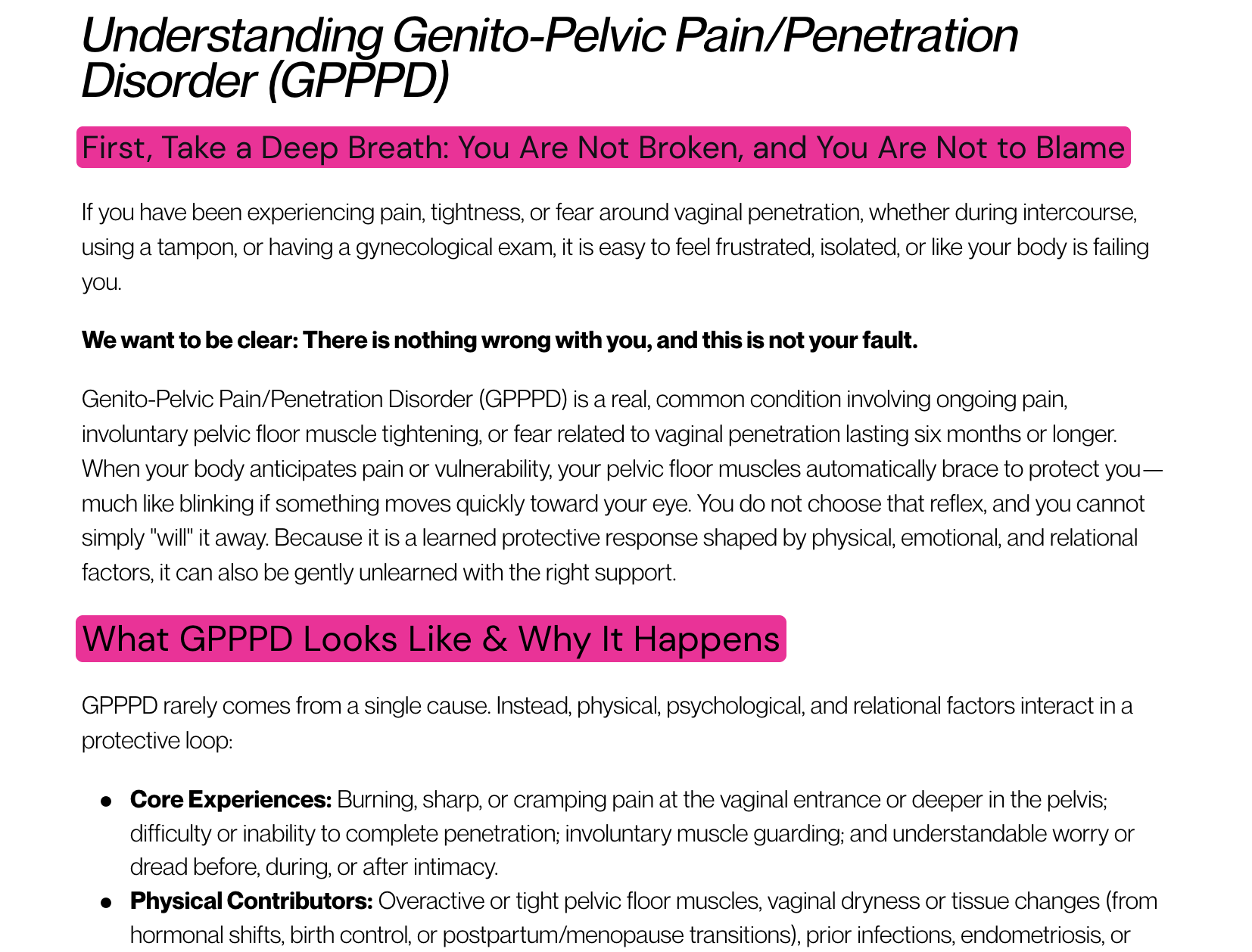 Image 2 of 3
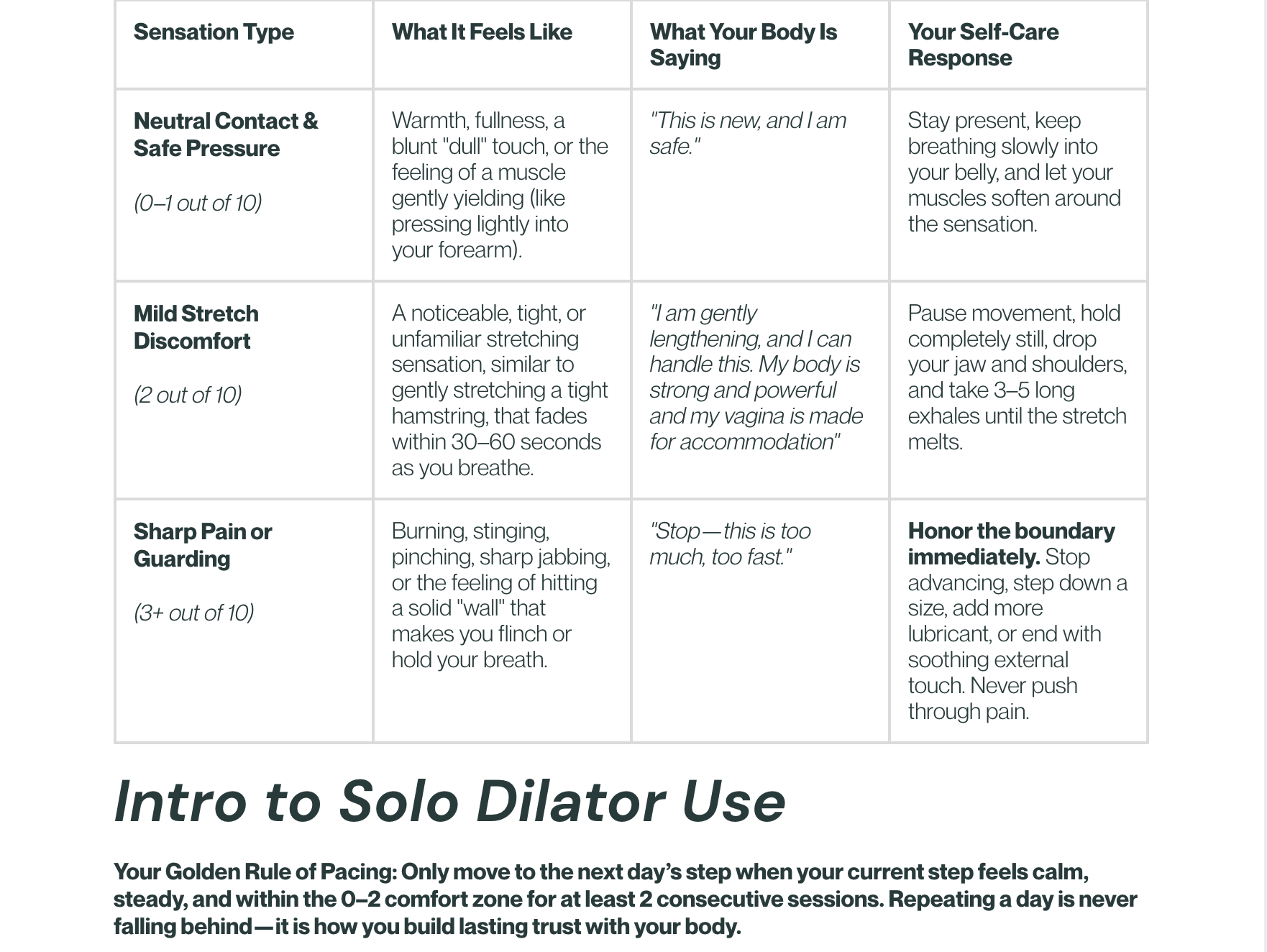 Image 3 of 3
Reclaiming Safety, Intimacy & Connection: A 14-Day Trauma-Informed Guide to Healing Pelvic Pain & GPPPD
Reclaiming Safety, Intimacy & Connection: A 14-Day Trauma-Informed Guide for Clinicians + Sex Therapists to Support Healing Pelvic Pain & GPPPD
This guide is built as an adaptable clinical template
No two clients or couples arrive in your office with the exact same nervous-system baseline, trauma history, medical picture, or relational dynamic. Rather than treating pelvic pain recovery as a rigid, one-size-fits-all checklist, this guide is intentionally structured as a flexible clinical template that providers can customize around the unique realities of each case:
Modular & Pace-Adjustable: Whether a client needs to spend three weeks on Day 1 nervous-system down-training before ever touching a dilator, or is ready to pair solo somatic mapping with partnered Sensate Focus right away, you can expand, repeat, or reorder steps without the client feeling "behind."
Adaptable Across Clinical Presentations: Easily tailor the pacing and framing for primary or secondary vaginismus, postpartum or perimenopausal tissue changes, medical/birth trauma, religious shame, or unconsummated marriages.
Individual & Relational Flexibility: Use the solo somatic and dilator modules on their own for individual clients, or integrate the Sharer & Active Listener debriefs and non-demand Sensate Focus tracks when working with couples.
Collaborative Care Ready: Designed to complement—not replace—your clinical judgment alongside pelvic floor physical therapy, OB/GYN care, and trauma reprocessing modalities like Accelerated Resolution Therapy (ART) or EMDR.
When your clients are navigating Genito-Pelvic Pain/Penetration Disorder (GPPPD), vaginismus, or painful intercourse, being handed a dilator kit without nervous-system pacing or relational guardrails often backfires, often turning physical therapy into a pass/fail test that reinforces pelvic floor guarding and decreases connection between couples, or reinforces shame for a woman.
Who This Guide Is For
Therapists, Sex Therapists & Pelvic Health Providers: Looking for a ready-to-print or reference, clinically grounded client packet to assign between sessions (includes clinical framing and an ABCST/ISW further-study bibliography).
What’s Included Inside This Printable PDF Packet
The Science of Pelvic Guarding: Shame-free education on GPPPD, sexual shame, and why slowing down is necessary to retrain the nervous system.
The 0–2 Comfort Rule Matrix: A clear somatic chart distinguishing neutral contact (0–1/10), safe stretch (2/10), and protective pain (3+/10) so users stay firmly in control.
3-Minute Diaphragmatic Reset & Body Scan Checklist: Step-by-step belly breathing and head-to-toe tension release cues (jaw, tongue, shoulders, glutes) to down-regulate the pelvic floor before sessions.
14-Day Solo Dilator Pacing Schedule: A day-by-day guide integrating Intimate Rose desensitization principles—from sanctuary setup and mirror mapping to passive rest, the "Pelvic Clock" release, and mastery-based progression rules.
Weeks 1–2 Couple’s Sensate Focus & Communication Guide: Grounded in Penner & Penner’s non-demand Sensate Focus protocol, featuring the Sharer & Active Listener debrief script, non-genital touch exercises, hand-riding cues, and common rushing phrases to avoid.
Clinical Scope Disclaimer & ABCST/ISW Reading List: Built-in educational scope protections and foundational references for ongoing study based off Elizabeth’s advanced, specialized training in sex therapy.
Format: Instant Digital Download (Printable PDF) | Created by The Reclaimed Collective, PLLC (Katy & Houston, TX).
Need Personalized Clinical Support or Peer Consultation?
Clients in Texas: Schedule a free 15-minute consultation for individual or couples trauma and sex therapy with Elizabeth Westbrook, LCSW in Katy, Houston Heights, or via telehealth for clients in Texas.
Fellow Clinicians: Book an individual or group clinical consultation to staff complex trauma, religious shame, or sexual pain cases. Consultation available nationwide.
About Elizabeth’s credentials:
Most therapy practices take a generalist approach, treating anxiety, couples conflict, or sexual pain as isolated surface issues without specialized training in sexual physiology, nervous-system neurobiology, or somatic trauma reprocessing. When pelvic pain (GPPPD) or intimacy trauma is handled through a purely generalist lens, clients are often given well-meaning advice to "just relax" or handed a dilator kit without the relational and neurological guardrails required for real healing.
This guide was developed by Elizabeth Westbrook, LCSW (#106434)—the only trauma and sexuality specialist currently practicing in person in the Greater Houston metro (with offices in Katy and Houston Heights) who holds this combined clinical credentialing and advanced training:
Sex Therapy Credentialing & Advanced Training: Sex Therapy Associate under consultation credentialed by the American Board of Christian Sex Therapists (ABCST), with over 150 hours of advanced post-graduate training through The Institute for Sexual Wholeness (ISW).
Trauma & Neurobiology Integration: Accelerated Resolution Therapy (ART)-trained clinician and Certified Neuropsychotherapist (NPT-C), bridging brain-based memory reprocessing with nervous-system down-training.
Somatic & Relational Depth: Elizabeth is a certified mediator and Cewrtified Wellness Coach credentialed by NASM, bringing practical mind-body literacy and attunement towards shifts needed when high-conflict relational pacing may be necessary through the protocol.
Rather than offering generic talk therapy, this toolkit reflects specialized, evidence-informed sex and trauma therapy built for the complex realities of pelvic pain, religious or cultural shame, and relational recovery.